Anthropocene Working Group
To understand and communicate what the Anthropocene is, and what it means for the Earth System and the human endeavour
What is the Anthropocene?
Thousands of scholarly articles and millions of mentions on the internet reflect a wide variety of ideas about what the Anthropocene actually is. A scientific reality is that hundreds of signals preserved in geological deposits, myriad data from other scientific fields, and societal norms indicate that since the middle of the 20th century, human impacts have been substantially different with respect to the rest of human history. It is this last seven decades or so that justifiably can be recognized as the Anthropocene epoch

Unprecedented planetary change in the 20th century
Planetary geology has always changed, why the fuss?

Exploring the Anthropocene
Humans have altered their environment since forever, what’s so special about the last 70 years?
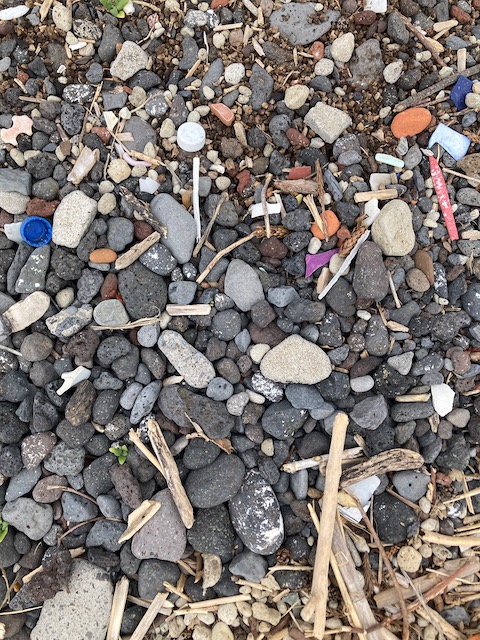
The Anthropocene Curriculum
The Anthropocene Curriculum was initiated to develop experimental and experiential approaches to knowledge formation in a rapidly changing planetary situation.
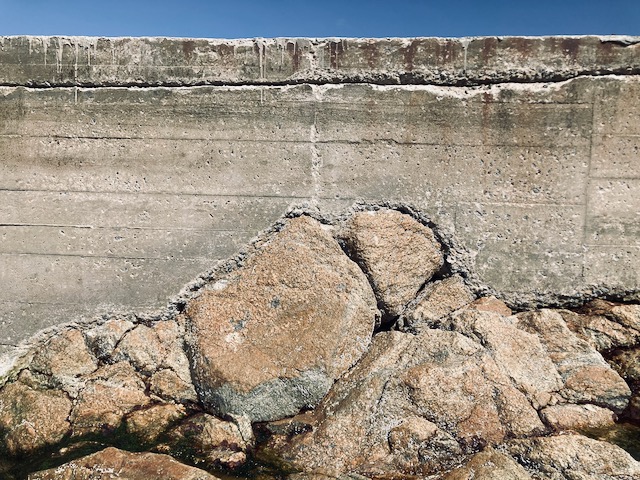
Anthropocene Commons
The Anthropocene Commons (AC) is a network of researchers, educators, activists, artists, scientists, and partner groups from all over the world working on the Anthropocene, the current time period in which human activities have fundamentally changed the planet.
THE BIOSPHERE IN THE ANTHROPOCENE
Theme issue ‘The biosphere in the Anthropocene’ compiled and edited by Mark Williams (AWG), Mary McGann, Moriaki Yasuhara and Chhaya Chaudhary. Philosophical Transactions of the Royal Society B (2026). Volume 381, Issue 1942, https://royalsocietypublishing.org/rstb/issue/381/1942
Humans are fundamentally changing the patterns of life on Earth. For thousands of years people have modified landscapes for farming, domesticating a small number of animals (whose numbers burgeoned) whilst wild species diminished. More recently we have impacted the coastal zones, and as technology advanced, our influence has spread across the continental shelves and into the deep oceans. Now, many thousands of non-native species moved by humans have reset the complement of animals and plants in ecosystems globally, both on land and in the sea. Combined, these changes threaten many ecosystems and have resulted in widespread extinctions. As the near future unfolds, are we heading for a major extinction of life on Earth or are we beginning to understand how better relationships with the other species around us might be crafted?

CONFERENCE NEWS
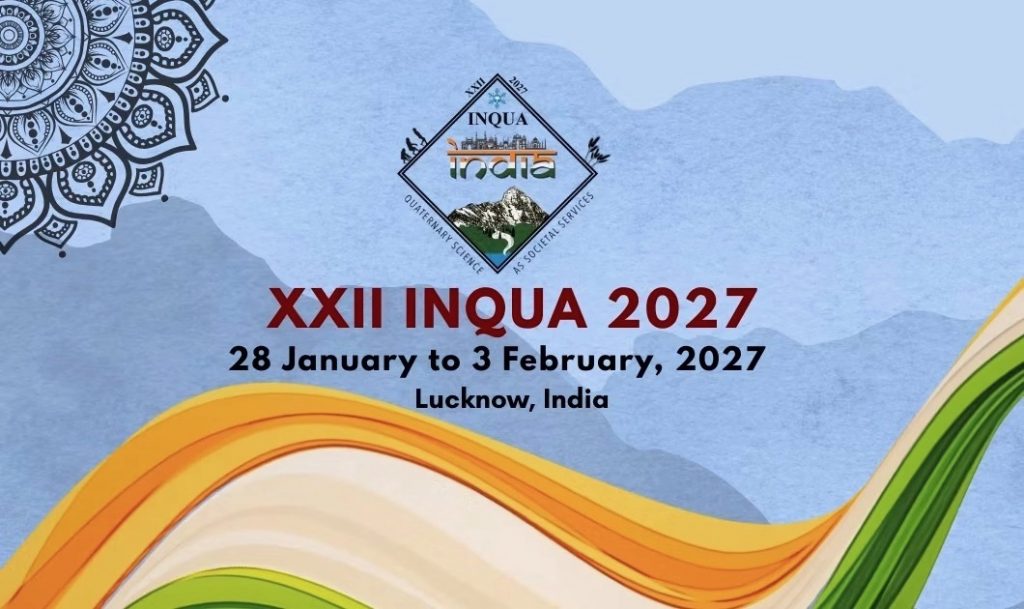
The INQUA Congress, held once every 4 years, is an extremely important venue for all Quaternarists to share their research and ideas. The next INQUA session is in Lucknow, India, January 28 to February 3, 2027. See: https://www.inquaindia2027.in/
An entire theme is devoted to the Anthropocene, and we have a special session on:
The Anthropocene epoch: geology, the Earth system, and relevance to society (Conveners: Martin J. Head, Jan Zalasiewicz, Colin N. Waters, Simon Turner)
The Anthropocene epoch, while rejected as an official unit of the geological time scale in 2024, remains a widely used concept and descriptor of Earth’s geological history from the mid-20th century to the present day and beyond, with planetary functions increasingly departing from Holocene norms. Quaternary science must account for this recent, unprecedented and planetary-scale change to remain relevant to wider society. Accumulated fossil-fuel-derived carbon dioxide in the oceans and atmosphere has already ensured that a changed planetary state will continue for hundreds of millennia, and its novel geological signature is indelible, with the biosphere irreversibly altered. But the Anthropocene epoch is more than this, representing a new way to engage with the humanities, social and educational sciences, law, politics and many other branches of enquiry and policy-making. We invite presentations on all aspects of the Anthropocene epoch, and on its transition from the Holocene.“
Please consider submitting an abstract to this special session. The deadline is 15 February, 2026,
AWG Member Papers
-
Welcome to the ‘Homogenocene’: how humans are making the world’s wildlife dangerously samey
Williams, M. & Zalasiewicz, J. The Conversation, January 29, 2026https://doi.org/10.64628/AB.ytrs456u3
-
Stories and science: two roles for palaeontology in the Anthropocene
Williams, M., Zalasiewicz, J.A., Waters, C.N., Petrovskii, S., Whitehead, H. and Wong Hearing, T.W., 2026. Stories and science: two roles for palaeontology in the Anthropocene. Philosophical Transactions of the Royal Society B: Biological Sciences, 381 (1942). https://doi.org/10.1098/rstb.2024.0435
-
The new Anthropocene biosphere
Barnosky, A. and Hadly, E., 2026. The new Anthropocene biosphere. Philosophical Transactions of the Royal Society B: Biological Sciences, 381 (1942). https://doi.org/10.1098/rstb.2024.0428
-
Distinct Anthropocene biosphere recorded by the rise of green algae and chrysophytes in varved sediments of Crawford Lake (Ontario, Canada).
McCarthy, F.M., Moraal, J.M., Hamilton, P.B., Pilkington, P.M., Alderson, A., Boyce, J.I., Llew-Williams, B. and Heyde, A., 2026. Distinct Anthropocene biosphere recorded by the rise of green algae and chrysophytes in varved sediments of Crawford Lake (Ontario, Canada). Philosophical Transactions of the Royal Society B: Biological Sciences, 381 (1942). https://doi.org/10.1098/rstb.2024.0423
-
The biosphere in the Anthropocene
Williams, M., McGann, M., Yasuhara, M., Chaudhary, C., Barber, L. and Allen, K., 2026. The biosphere in the Anthropocene. Philosophical Transactions of the Royal Society B: Biological Sciences, 381 (1942). https://doi.org/10.1098/rstb.2024.0416
-
A 7000-year record of human influence on Global River Deltas: Geomorphology, stratigraphy, the Anthropocene overprint and future
Anthony, E., Syvitski, J., Cohen, K.M., Saito, Y., Zăinescu, F., Vespremeanu-Stroe, A., Nicholls, R.J., Marriner, N., Amorosi, A., Maselli, V. and Minderhoud, P.S.J., et al. 2025. A 7000-year record of human influence on Global River Deltas: Geomorphology, stratigraphy, the Anthropocene overprint and future. Earth-Science Reviews, p.105302. https://doi.org/10.1016/j.earscirev.2025.105302
Other Curated Papers
-
Why the Anthropocene Epoch is a more pertinent concept than the Anthropocene event for understanding ongoing Earth system transition.
Chakraborty, A. (2024). Why the Anthropocene Epoch is a more pertinent concept than the Anthropocene event for understanding ongoing Earth system transition. The Anthropocene Review, 12(1), 118-128. https://doi.org/10.1177/20530196241270665
-
The Evolving concept of the Anthropocene: A reply to Zalasiewicz et al.
Edgeworth, M., Bauer, A. M., Ellis, E. C., Finney, S. C., Gibbard, P. L., Maslin, M., et al. (2025). The Evolving concept of the Anthropocene: A reply to Zalasiewicz et al. Earth’s Future, 13, e2025EF006882.https://doi.org/10.1029/2025EF006882
-
Global change pattern of sedimentary nitrogen isotope during the Anthropocene epoch.
Li, X., Lu, M., Wu, J. et al. Global change pattern of sedimentary nitrogen isotope during the Anthropocene epoch. Commun Earth Environ 6, 809 (2025). https://doi.org/10.1038/s43247-025-02773-5