AWG: Biological Systems subgroup
This sub-group has the overarching theme of quantifying the degree of biological change during the Anthropocene.
Contacts:
Anthony Barnosky barnosky@berkeley.edu
Alejandro Cearreta alejandro.cearreta@ehu.eus
Francine McCarthy fmccarthy@brocku.ca
Libby Robin libbydeq@gmail.com
Mark Williams mri@le.ac.uk
Our Approach
This sub-group examines patterns of both negative (e.g., habitat loss, accelerating extirpation and extinction, homogenisation of taxa and ecosystems) and positive contemporary change (e.g., multifunctional landscapes that promote biodiversity, adopting practices from indigenous knowledge, rewilding city landscapes). It attempts to establish a stratigraphical record of contemporary biosphere change as a means of comparing with past changes to the biosphere. It forges links with other sub-groups within the AWG that examine the geological, historical and societal context of the Anthropocene, and the degree of technological change that influence biological systems. It explores ways of understanding and interacting with the biosphere that can enact positive change, both for humans and all other species we co-habit this planet with.
How does recent biological change manifest in the physical geological record of the Anthropocene?
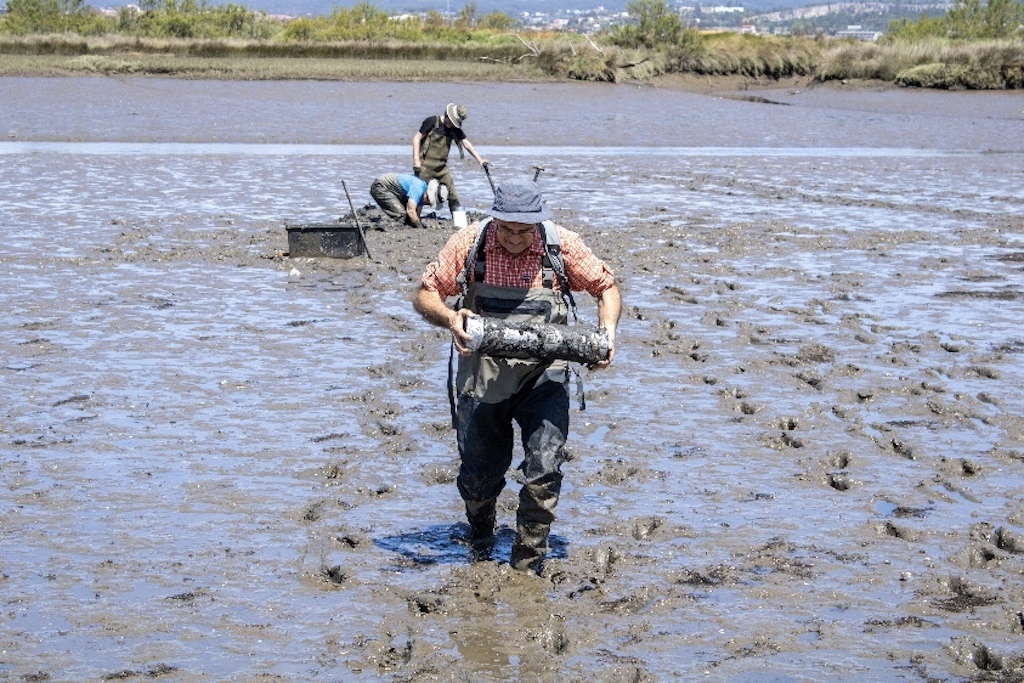
Here we explore sedimentary archives from lakes, rivers, estuaries and seas. We examine local changes, such as the arrival of non-native species into a lake or river catchment, and more global changes, such as those to plankton ecosystems resulting from global environmental change. We determine the fossil record of these changes and their utility for developing a global web of stratigraphical correlation for the Anthropocene, thus linking with the GSSP and Earth System Change sub-groups of the AWG. And, we use our analysis to complement the existing observational knowledge on when non-native species arrived in a region and their impacts on indigenous species. Our fossil data also enable comparisons with deep time (pre-Holocene) geological records of environmental change, as potential analogues of contemporary change.
What kind of change to the biosphere is humanity causing and what is the scale of this modification?
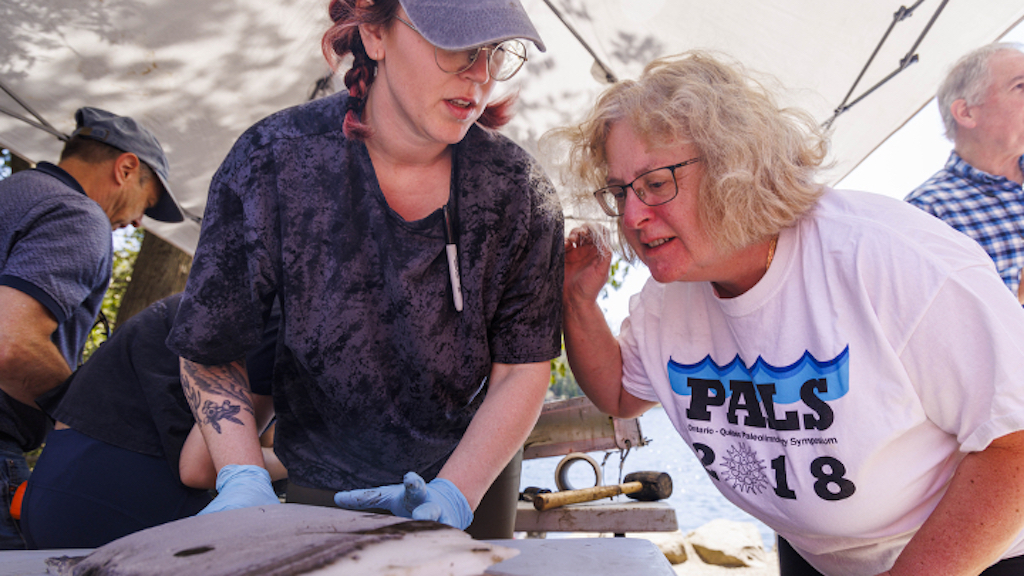
Here we examine the biosphere from the local to the global level, looking at Neogene and Paleogene analogues as well as comparing modern conditions to earlier in the Quaternary. At the local level, some ecosystems display changes that might reflect enhanced biodiversity and increased resilience as they confront rapid climate change, and conversely other ecosystems reveal declining resilience and a growing inability to adapt to accelerating environmental pressures. At the planetary scale, the overall current trajectory of biological change in the Anthropocene points toward escalating biodiversity loss and intensifying ecological disruption, indicating a progression toward a potential mass extinction.
How can systems be configured to enhance biodiversity?
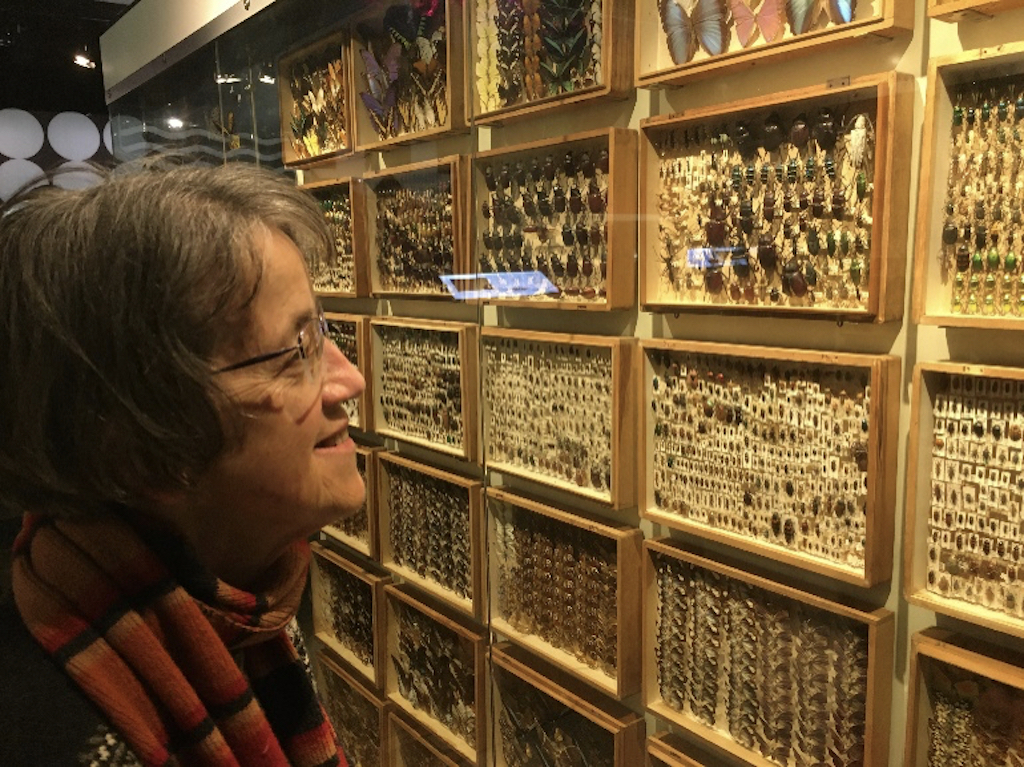
There are many examples of humans operating as super-generalists in ecosystems to enhance biodiversity and protect those systems inter-generationally. These approaches offer models from which new, beneficial ways of interaction with the biosphere can be developed. For example, urban and agricultural systems can be reconfigured to support biodiversity through regenerative design, ecological restoration and reduction in patterns of consumption to make them sustainable in the long-term. This area of our work also addresses the way that caring for nature is good for humans emotionally and physically – restoring ecological connections can also restore social connectivity. Here too, and without prejudice, we are particularly interested in nurturing beneficial relationships between humans and the other species we occupy this planet with, to secure the biodiverse ecologies of the future.
Biological Systems Outputs
Publications, Projects and In Progress

Recent Publications
If you are interested in these or any of our other publications, please email the authors above
The biosphere in the Anthropocene. Royal Society Transactions B 2026
The new Anthropocene biosphere. Royal Society Transactions B 2026
The fossils being formed today will show how humankind disrupted life on Earth
Has the Earth’s sixth mass extinction already arrived? Nature
Murchie, T.J., Emery, M.V., Cocker, S., Natola, L., Kuch, M., Rutledge, L., McCarthy, F.M.G., Pisaric, M., Poinar, H.N. 2026. Sedimentary ancient DNA tracks multi-kingdom ecosystem reorganizations following sequential human land use at Crawford Lake. Molecular Ecology, forthcoming in summer 2026

Projects and Exhibitions
We contribute to museum exhibitions, research programmes and projects, and thematic publications
Crawford Lake, Layers in Time. Museum Exhibition at the Royal Ontario Museum
Can future cities co-exist with a functional and diverse biosphere in the Anthropocene? A thematic volume in progress for the Royal Society journal Interface Focus
Blue-carbon geological storage from annual to millennial timescales in Cantabrian salt marshes. Research proposal submitted to the Spanish Ministry of Science, Innovation and Universities
Can village ecologies be truly sustainable in the Anthropocene (PhD study, University of Leicester)

Other core members of Biological Systems subgroup
Soren Brothers sbrothers@rom.on.ca
Barbara Fialkiewicz-Kozieł barbara.fiałkiewicz-koziel@amu.edu.pl
Giovanni Fava giovanni.fava@unive.it
Elizabeth Hadly hadly@stanford.edu
Paul Hamilton phamilton@nature.ca
Martin J. Head mjhead@brocku.ca
Reinhold Leinfelder reinhold.leinfelder@fu-berlin.de
Susanna Lidström suslid@kth.se
Mary McGann marymcgann1929@yahoo.com
Sverker Sörlin sorlin@kth.se
Allison Stegner (allison.stegner@gmail.com
Moriaki Yasuhara moriakiyasuhara@gmail.com
Jan Zalasiewicz jaz1@le.ac.uk