AWG: History, the Humanities and Societal Organization
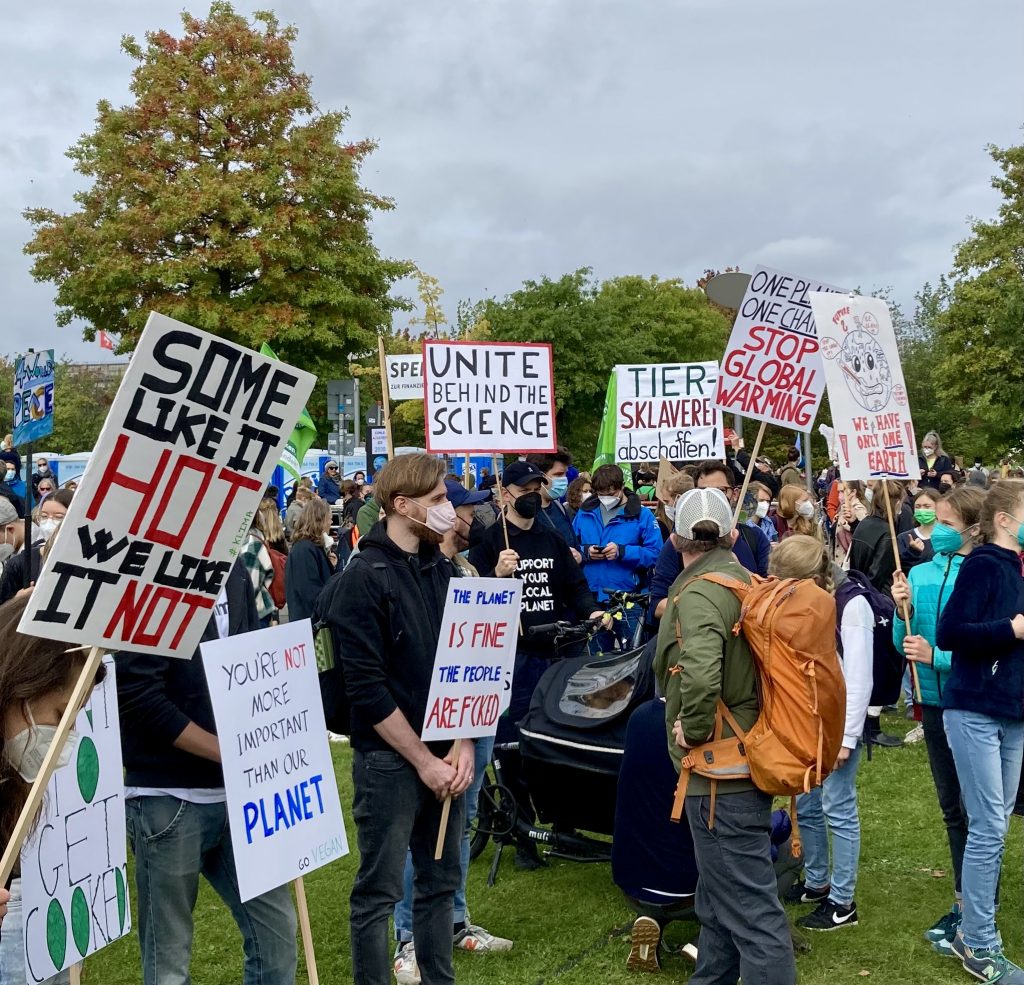
This subgroup has one over-riding objective: to understand the Anthropocene, as defined in the Earth sciences, from the perspective of the humanities and the social sciences.
Contacts:
Julia Adeney Thomas thomasjna@aol.com
Our Approach
This sub-group speaks to the important web of connections among history, politics, economics, society, and culture that constitute the human systems that now stand in a new relationship with the Earth System. The Anthropocene poses new questions about (1) the human past in relation to the planetary past, (2) how we might characterize our current condition, (3) our hopes for the future on an altered Earth, and (4) the adequacy of our current forms of humanistic and social scientific knowledge for the Anthropocene. In disciplinary terms, this subgroup includes history both as a social science and as a humanistic endeavor, the history of science, anthropology, economics (particularly ecological economics), literary studies, philosophy, ethics, human geography, anthropology, sociology and law with wider collaborations also being welcomed. As a step toward meeting our goal of understanding the Anthropocene as a human phenomenon as well as a scientific reality, we pose ten questions below and invite collaboration.
1. How should we characterize the human condition in the Anthropocene today?
Planetary transformation has been well attested to in the physical and biological sciences. The central question for this AWG subgroup is how to define the novel social characteristics that distinguish Anthropocenic human societies from Holocenic ones.
2. How did human systems come to overwhelm the Earth System in the twentieth century?
Humans, like other creatures, have always interacted with their environment. The question that Anthropocene historians, humanists, and social scientists explore is how people created the global system that overwhelmed natural forces. Which interactions led to planetary transformation—and, conversely, which interactions resisted that trajectory? As in the physical and biological sciences, the human causes of the systemic transformation of the planet were propelled not by a single factor but instead by a broad swathe of interlocking events, social structures, ideas, and accidents. Answers so far have ranged from the mastery of fire by pre-Homo sapiens through human ventures leaving Africa and the development ~50,000 years ago in our capacities for symbol logic and therefore more efficient ways of exploiting our environments to Holocene developments ranging from agriculture to nuclear bombs and much in between.
3. Was the Anthropocene an inevitable outcome of human capacities or was it a contingent development?
History, the humanities, and the social sciences have long rejected determinism but lately, with the rise of Big History, neurohistory, and other approaches, the question of how much of human history is determined by forces beyond our control and how much by conscious decision-making has come to the surface again. This problem is particularly critical as we attempt to mitigate biodiversity loss, climate change, nitrogen overload, and the host of interrelated challenges posed by the Anthropocene. Moreover, this question is complicated by the concept of the technosphere which positions human beings as being unable to fully control the overarching and ungovernable system on which we rely. Instead of being agents in charge of the technosphere, we can, at best, hope to influence it in ways supportive of the web of life. The classic question of determinism is as much about future possibilities as much as it is about past processes.
4. What does the Anthropocene mean for humanity’s hopes?
History is understood both as a descriptive art illuminating what has happened and also as a humanistic enterprise bent on asking what’s important to people and how we might make something better of our predicament. In the first sense, history parallels scientific inquiry into planetary history. In the second sense, history is a humanistic, political, and ethical practice, directed at articulating values rooted in traditions where standards of evidence and modes of articulation differ from the natural sciences.
5. Are there earlier ways of organizing culture, society, economics, and politics that might offer lessons for today or are conditions on our now non-analog planet too unprecedented for the past to inform the future?
Since our future on our altered Earth little resembles our past, it has been argued that history has nothing to offer our non-analog condition, but others contend that history remains vital in showing us that there are alternative ways of living that might be reworked to create societies capable of regenerative practices. The research of this group into the potential lessons of the past human societies can benefit from the work being done on pre-human ecologies subject to massive disruption and from work on how we might reform societies to become persistent drivers of enriched biodiversity in Anthropocene conditions, helping to stabilize local and ultimately planetary human-natural systems.
6. How might the epistemological, archival, and rhetorical norms of our disciplines, developed in the eighteenth and nineteenth centuries, need to be altered to grasp the Anthropocene?
The divisions and forms of knowledge that guide our understanding of human beings and our societies were largely developed in the very late Holocene with the efflorescence of secular knowledge in late-eighteenth and nineteenth-century universities. For instance, modern linear history rooted in archives arose alongside the European and American nation-state and largely overwhelmed other ways of understanding the past as non-teleological or cyclical. The Anthropocene, understood as “rupture” in the view of ethicist Clive Hamilton, undermines this linear narrative, adds the Earth sciences to our archives, and produces new concepts of subjectivity such as Earth System agency. Historians and others are reexamining standard disciplinary practices and developing better modes of knowledge for addressing the Anthropocene.
7. How do historians, humanists and social scientists contend with planetary scales of space and time??
Histories and studies of contemporary social organizations have been, for the most part, local, national, and regional because this is how life has been lived, but the advent of globalization and the Anthropocene has raised questions about frameworks of time and space. The scales necessary to understand the human condition have expanded to include the planetary.
8. What is the relationship of Anthropocene history to environmental, climate, intellectual, economic, cultural, social, and political history?
History can take many forms as listed above. One goal of this subgroup is to distinguish Anthropocene history from other forms of history, even as these forms tend to draw upon and learn from one another.
9. Which economic forms are suitable in the Anthropocene?
It is widely agreed that neo-classical (standard) economics is blind to natural limits because it assumes that substitution will permit ever expanding growth. Both environmental economics and ecological economics offer alternatives. Major contributors to fruitful lines of thinking include Herman Daly, Elinor Ostrom, Helen Norberg-Hodge, Robert Costanza, and Daniel W. O’Neill. One goal of this subgroup is greater integration of economic thinking into the AWG’s efforts.
10. Which political forms are suitable in the Anthropocene?
Our subgroup aims to engage debates over the political forms appropriate to contending with the Anthropocene. Current proposals include global governance, ecoauthoritarianism, ecosocialism, localism, and new more flexible forms of power relations to meet the unpredictable challenges of the Anthropocene.
AWG Subgroup: History, the Humanities and Societal Organization
Publications, Projects and In Progress

Recent Publications
If you are interested in these or any of our other publications, please email the authors above

Projects and Exhibitions
We contribute to museum exhibitions, research programmes and projects, and thematic publications

Other core members of subgroup
John McNeill mcneillj@georgetown.edu
Eva Horn eva.horn@univie.ac.at
Naomi Oreskes oreskes@fas.harvard.edu
Buhm Soon Park parkb@kaist.edu
Libby Robin libbydeq@gmail.com
Sverker Sörlin sorlin@kth.se