AWG: Education
The Anthropocene is a new geological epoch characterised by a transformation of the Earth’s habitability for human life in society and for living organisms broadly. Contemporary biogeophysical knowledge, organised around the paradigm of rupture (tomorrow is not an extension of today, and sudden and irreversible ruptures may be ahead of us), casts doubt on education that is usually conceived around a linear paradigm.
Contacts:
Nathanaël Wallenhorst nathanael.wallenhorst@uco.fr
Reinhold Leinfelder reinhold.leinfelder@fu-berlin.de
Simon Turner simon.turner@ucl.ac.uk
Our Approach
This sub-group has three scientific objectives…
1. Developing the Anthropocene as an educational tool.
This involves exploring ways in which the Anthropocene epoch can be conveyed and understood as a conceptual tool for teachers. Indeed, in a world where facts are contested, the conceptual tool of the Anthropocene epoch provides real value for society in general and for education in particular. As a unifying concept, it helps us (a) understand the transformed bioclimatic conditions in which we live, (b) appreciate how fragile they are, how rapidly they are shifting, and their implications for humanity, and (c) explain the importance of containing climatic, biological, and attendant societal runaway effects, through deeper understanding of the Earth System. The Anthropocene as an educational tool can illuminate the web of connections between these themes but should remain at arm’s length from calls to action.
2. Rethinking educational research, based on the paradigm of rupture (Holocene/Anthropocene)
This aims to advance research and research-based knowledge in education, in light of the transformation of bioclimatic conditions in the Anthropocene.
3. Laying the foundations for an epistemological renewal to educate and stimulate all the social sciences and humanities.
The Anthropocene is a framework for interpreting reality. It provides a renewed understanding of how the Earth system and the world work, linked to the logic of rupture. It is particularly unusual, in the Social sciences and Humanities, to understand the world on the basis of matter. These are disciplines in which the world is typically viewed in terms of ideas or analyses of social experiences and interactions. With the possibility of a real rupture in theequilibrium of the Earth system, it seems necessary to draw on the concept of the Anthropocene as a geological epoch in order to rethink the methods, concepts, theories, paradigms and epistemology of the social sciences and humanities.
AWG Subgroup: Education
Publications, Projects and In Progress

Recent Publications
If you are interested in these or any of our other publications, please email the authors above
Wallenhorst, N., Turner, S., Hétier, R., Russi, L., Barnosky, A.D., Waters, C.N., Williams, M., McCarthy, F.M., Head, M.J., McNeill, J.R. and Wagreich, M., (2026). The Anthropocene as a conceptual tool for education. The Anthropocene Review, https://doi.org/10.1177/205301962614538.
Renaud Hétier & Nathanaël Wallenhorst, Philosophy of Education in the Anthropocene Epoch, Palgrave Macmillan (Book series : Educational Futures) (2025), https://doi.org/10.1007/978-3-031-80264-5.
Nathanaël Wallenhorst, Renaud Hétier, Jean-Philippe Pierron & Christoph Wulf (Eds) (2023). Political education in the Anthropocene. Springer-Nature. https://doi.org/10.1007/978-3-031-40021-6.
Leinfelder, Reinhold & Hamann, Alexandra (2025): Imagining the Anthropocene with Images. The Potential of Slow-Media for Co- Designing Futures.- In: Sippl, C, Capatu, I. & Krebs, R.E. (eds), „Es wird einmal …” Wissen schaffen – Zukünfte erzählen. Pädagogik für Niederösterreich, Bd. 17, p. 228-255, Innsbruck, Wien. https://doi.org/10.53349/oa.2025.a1.170 (for entire volume)

Projects and Exhibitions
We contribute to museum exhibitions, research programmes and projects, and thematic publications
ANR PRC project ‘Anthropo-cène-scolaire’: 30 researchers from 5 laboratories (UCO, Aix-Marseille, Montpellier, Lyon, Nice-Côte d’Azur, Rouen). Two full-time postdoctoral researchers for three years. (January 2026–December 2029). Scientific committee : Jean-Marc Lange (University of Montpellier) ; Angela Barthes (University of Aix-Marseille) ; Cécile Redondo (University of Nice-Côte d’Azur) ; Isabelle Harlé (University of Caen).
Angers Loire Métropole (ALM) project: ‘Education in the Anthropocene’. One full-time postdoctoral researcher for one year. (December 2025–November 2026)
Franco-Brazilian CNPq Brazil project: ‘Rhythms of the Anthropocene and Paradigmatic Shifts in Environmental Education in Brazil and France’. One full-time postdoctoral researcher for two years.
International Research Network (IRN) ‘Education in the Anthropocene’ by the World Education Research Association (WERA) has been awarded the IRN call for proposals (2024–2027). Comprising 60 researchers (from the UK, Italy, China, Austria, Australia, Canada, India, Sweden, Germany, South Korea, Switzeland, Belgium, the USA and France).
Encyclopedia of the Anthropocene – Pluriversal perspectives: (Springer Nature, 2026, Eds. Wallenhorst & Wulf). Work in progress open to associate editors and thematic entries. https://link.springer.com/referencework/10.1007/978-3-031-51703-7
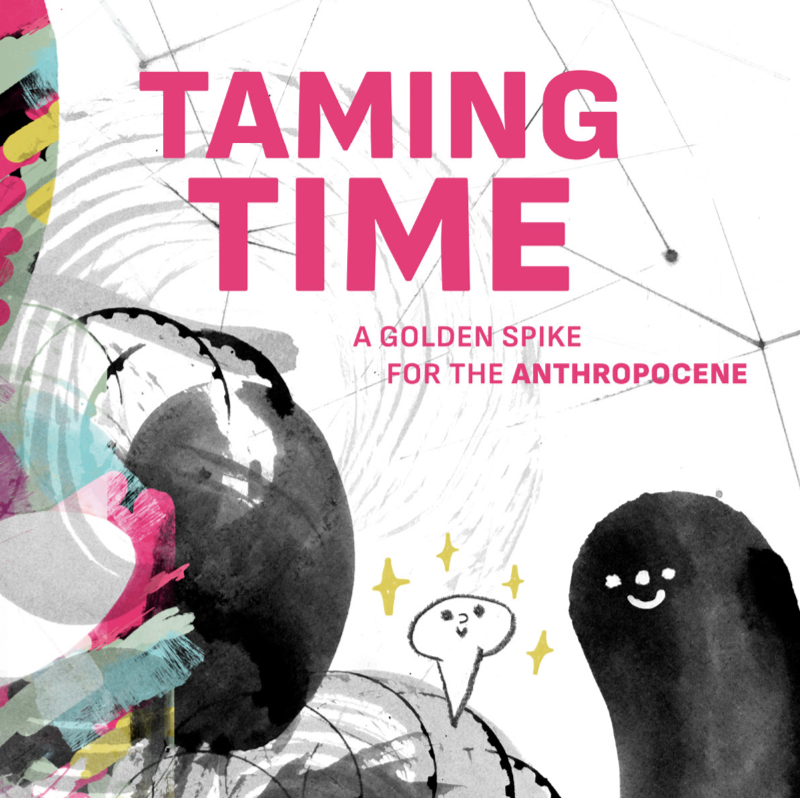
“Taming Time – A Golden Spike for the Anthropocene”. A science graphic novel based on the AWG proposal for a formal geological epoch to define the Anthropocene – Open Access (below).
Hamann, Alexandra; Leinfelder, Reinhold; Shimizu, Maki (2024 (2nd ed.): Taming Time. A Golden Spike for the Anthropocene.- Refubium Open Access-Server, Freie Universität Berlin, http://dx.doi.org/10.17169/refubium-40617.2