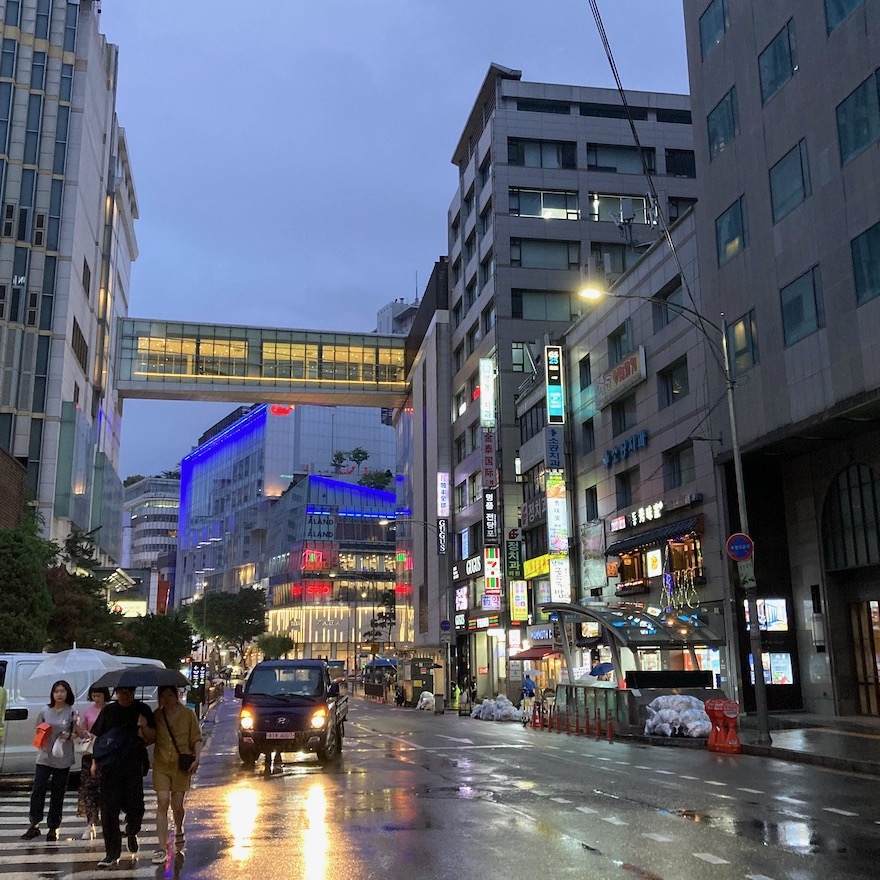
AWG: Technological Systems subgroup
This subgroup examines the rise of the technosphere — the vast global network of human-made systems including cities, digital infrastructure, transport systems, energy grids, industrial agriculture, organizational bodies, and communication technologies — that has reshaped Earth in the Anthropocene.
Contacts:
John Palmesino office@territorialagency.com
Buhm Soon Park parkb@kaist.edu
Ann-Sofi Rönnskog office@territorialagency.com
Mark Williams mri@le.ac.uk
Jan Zalasiewicz jaz1@leicester.ac.uk
Our Approach
Our primary goal is to examine the causes, trajectories, and consequences of the planetary transformation recorded in and through these technological systems. This task requires collecting evidence from wide-ranging sources, such as documents, narratives, numbers, and images, and interpreting and representing them in various ways. We attend closely to local and regional situations while drawing out implications of global and planetary scale. Our approach will facilitate productive conversations among diverse fields of study, including Earth system science, geology, ecology, history, STS, discard studies, disaster studies, and the arts.
Interconnectivity: What drives the construction of transnational technological systems, and through what mechanisms?
- We examine how interconnected technological systems emerge, expand, and become a defining geological force, reshaping Earth’s atmosphere, oceans, soils, and biodiversity at planetary scale.
- We investigate the economic and cultural flows that sustain and reproduce these systems, including financial and non-financial credit, monetary investment, and the affective and aspirational investments through which technological futures are imagined, desired, and contested.
- We analyze the co-constitution of physical and political power within the technosphere, asking how material infrastructures and political formations mutually produce one another, as illustrated by the entanglement of fossil fuel systems with capital accumulation, state authority, and geopolitical order.
- This allows us to investigate further the ways in which historical forces have accelerated the construction of the technosphere in the Anthropocene — and how, in turn, technological development opens novel horizons of interconnection and new media of circulation, generating new venues for human activity and political imagination.
Metabolism: How are humans and nonhumans, living and nonliving entities, and ideas and materials extracted, circulated, consumed, and discarded within the technosphere?
- By critically engaging Peter Haff’s concept of metabolism in the technosphere, we examine the diverse operational mechanisms through which technological systems sustain, transform, and reproduce themselves.
- We investigate how urbanization operates as a key metabolic process of the technosphere, drawing on vast flows of materials, energy, and life forms that reshape relations among cities, infrastructures, and more-than-human worlds.
- We attend to the residues generated through the metabolic processes of the technosphere, including toxic wastes, contaminated landscapes, and enduring social memories, which reveal the lasting traces and afterlives of metabolic activity across lithosphere, hydrosphere, and biosphere.
- We also explore the ethical and political dimensions of these metabolic processes and seek to articulate the range and modes of human responsibility.
Fragility: How does the metabolism of the technosphere intensify the increasingly intertwined biological and technical fragilities?
- Our work highlights how biological and technical fragilities are increasingly intertwined: ecosystems weakened by climate change, extraction, and biodiversity loss can no longer reliably buffer environmental shocks, while technological systems such as supply chains, energy grids, and digital networks remain vulnerable to cascading failures.
- We examine how humans, technologies, and environments exist in unstable networks of relations, transgressing clear boundaries and resisting coherent, controllable properties. From this perspective, fragility is not a temporary malfunction but a defining condition of the technosphere–biosphere relations, one upon which civilisations depend through precarious alignments between ecological and technological processes.
- We also investigate fragilities emerging from industrial pollution, military contamination, nuclear waste, and other forms of toxic legacy, which create enduring conditions of exposure and uncertainty.
Technological Systems Outputs
Publications, Projects and In Progress

Recent Publications
If you are interested in these or any of our other publications, please email the authors above
Gärdebo, J., Marzecova, A., & Knowles, S. G. (2017). The orbital technosphere: The provision of meaning and matter by satellites. The Anthropocene Review, 4(1), 44-52. https://doi.org/10.1177/2053019617696106
Choi, M.-A., & Park, B. S. (2026). More-than-Human Mediation: Social Scientists in the Making of Environmental AI Systems. Science, Technology, & Human Values, 51(5), 907-933. https://doi.org/10.1177/01622439251393756
Tsing, Anna Lowenhaupt, Deger, Jennifer, Keleman Saxena, Alder and Zhou, Feifei. (2024). Field Guide to the Patchy Anthropocene: The New Nature, Redwood City: Stanford University Press https://doi.org/10.1515/9781503638662
Ahn, S., & Park, B. (forthcoming). “Toxic Heritage as Anthropocene Archives.” In E. Breithoff, L. Renshaw, & M. Leonard (Eds.), Evermath: Ecologies of Violence in Unsettled Worlds. UCL Press.
Palmesino, J. and Rönnskog, A.-S. (eds.) (2025) How heavy is a city? Lisbon: Lisbon Architecture Triennale. https://www.trienaldelisboa.com/books/how-heavy-en
Zalasiewicz, J., Williams, M., Waters, C. N., Barnosky, A. D., Palmesino, J., Rönnskog, A.-S., Edgeworth, M., Neal, C., Cearreta, A., Ellis, E. C., Grinevald, J., Haff, P., Ivar do Sul, J. A., Jeandel, C., Leinfelder, R., McNeill, J. R., Odada, E., Oreskes, N., Price, S. J., … Wolfe, A. P. (2017). Scale and diversity of the physical technosphere: A geological perspective. The Anthropocene Review, 4(1), 9-22. https://doi.org/10.1177/2053019616677743
Williams, M, Zalasiewicz, J. (2026, in press). A disharmony of the spheres in the Anthropocene. In Planetary Metaphysics. Scientific, Religious, and Philosophical Perspectives on the Human-Earth Relationship. Indiana University Press.

Projects and Exhibitions
We contribute to museum exhibitions, research programmes and projects, and thematic publications
Anthropocene Curriculum (archived) Technosphere, Berlin, 2015-19

Anthropocene Curriculum (archived) Technosphere X Knowledge, 2016
Lisbon Architecture Triennale, 2025 Examines the Technosphere and Human Impact on Earth
Earth as a sensorium, ARS Electronica, Linz, September 2025
Upcoming – International Symposium on Anthropocene and Disaster Studies, Kyoto, September 18, 2026
Upcoming – Can future cities co-exist with a functional and diverse biosphere in the Anthropocene? A thematic volume for the Royal Society journal Interface Focus
